Container Collision
You run your link. The chain runs your results. That is how it works in Rotterdam, and that is how it works in this game.
For people who work in the chain or think about it
From student to port operator to policymaker. You do not need to be an expert going in. You will be one two hours later.
- Students in logistics, port management and supply chain management
- People at terminals, shipping lines, inland operators and hauliers
- Policymakers designing chain-wide solutions
- Research and innovation teams in logistics
What you take away
After the game you do not just know what goes wrong. You know why, and you know what to do about it.
Everyone does their job well, yet the chain fails
That is the moment in round one. Your decisions are fine. Your score looks good. The chain grinds to a halt. Why? That is the lesson.
One disruption, three links still suffering
A late vessel. Barges waiting. Rail falls back on trucks. Trucks queue at the gate. You watch it unfold in real time.
More infrastructure does not fix this
The chain does not have a capacity problem. It has a coordination problem. That realisation usually lands somewhere in round three.
Three things that block everything
Governance, data exchange, bundling. After the game you have a name for each problem you just caused yourself.
Symptom or root cause?
After the game you know the difference. And you know the order in which things need to change.
How it works
You run one link. You see your own numbers. The rest you have to guess. That is the point.
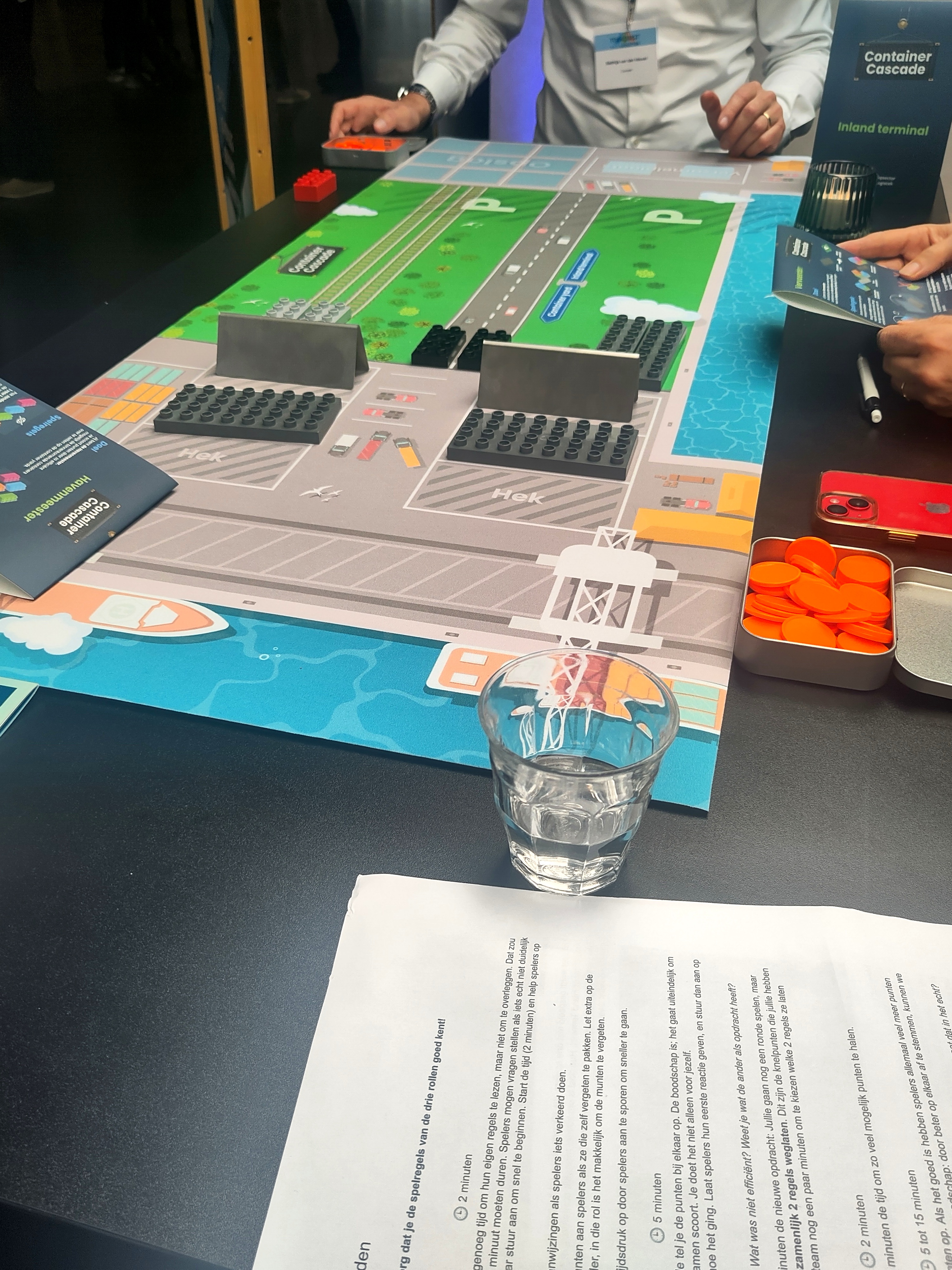
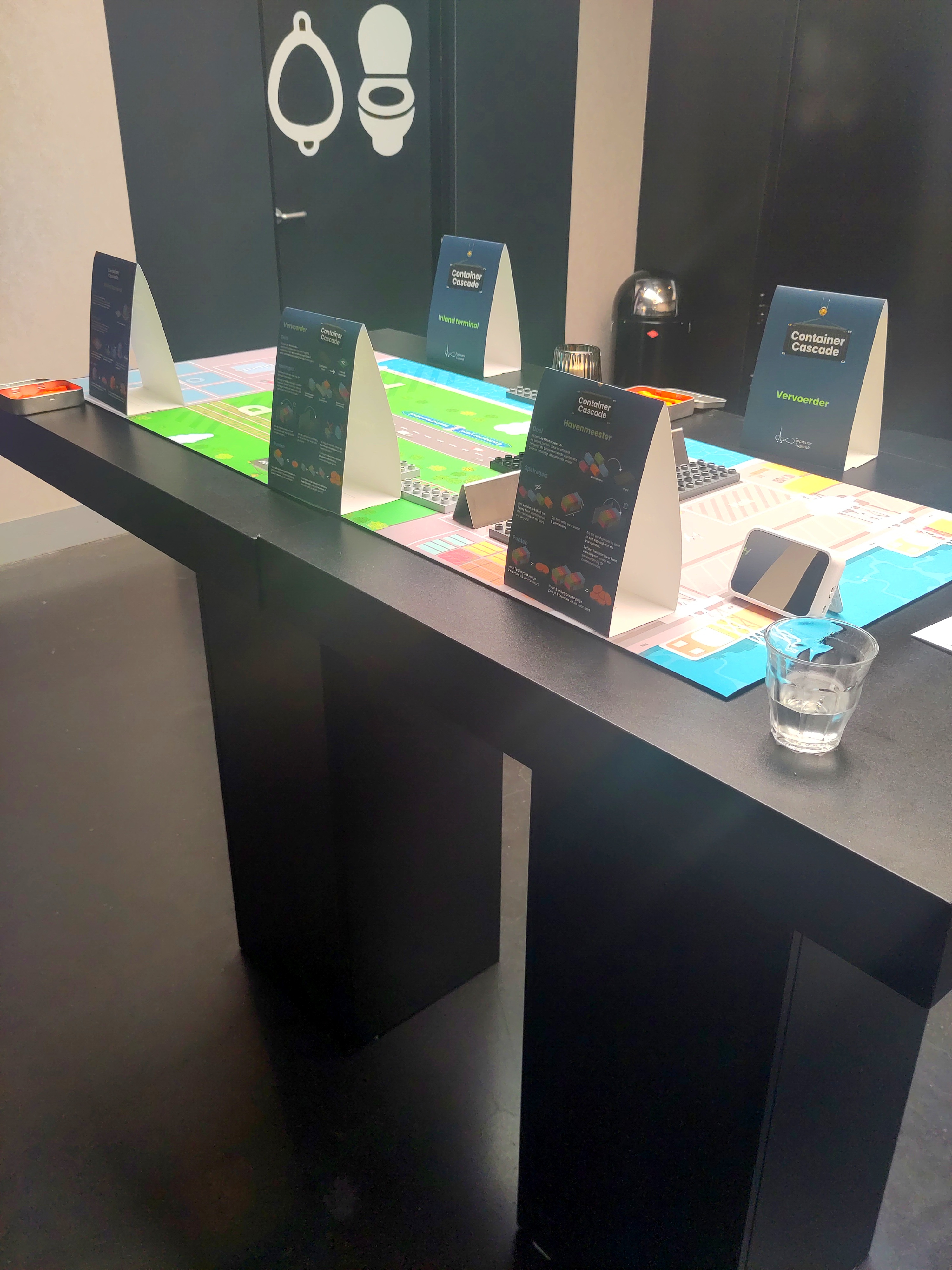
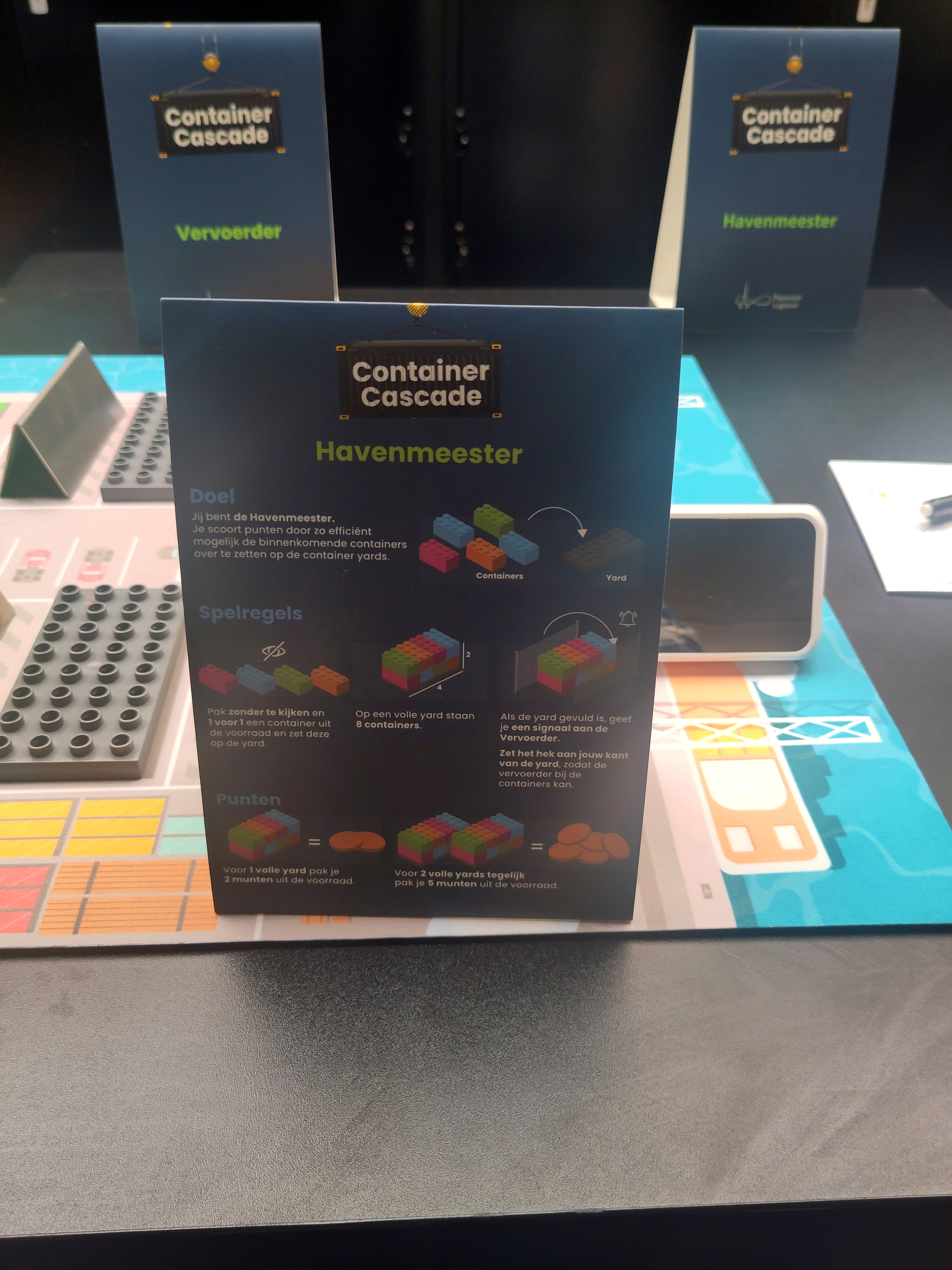
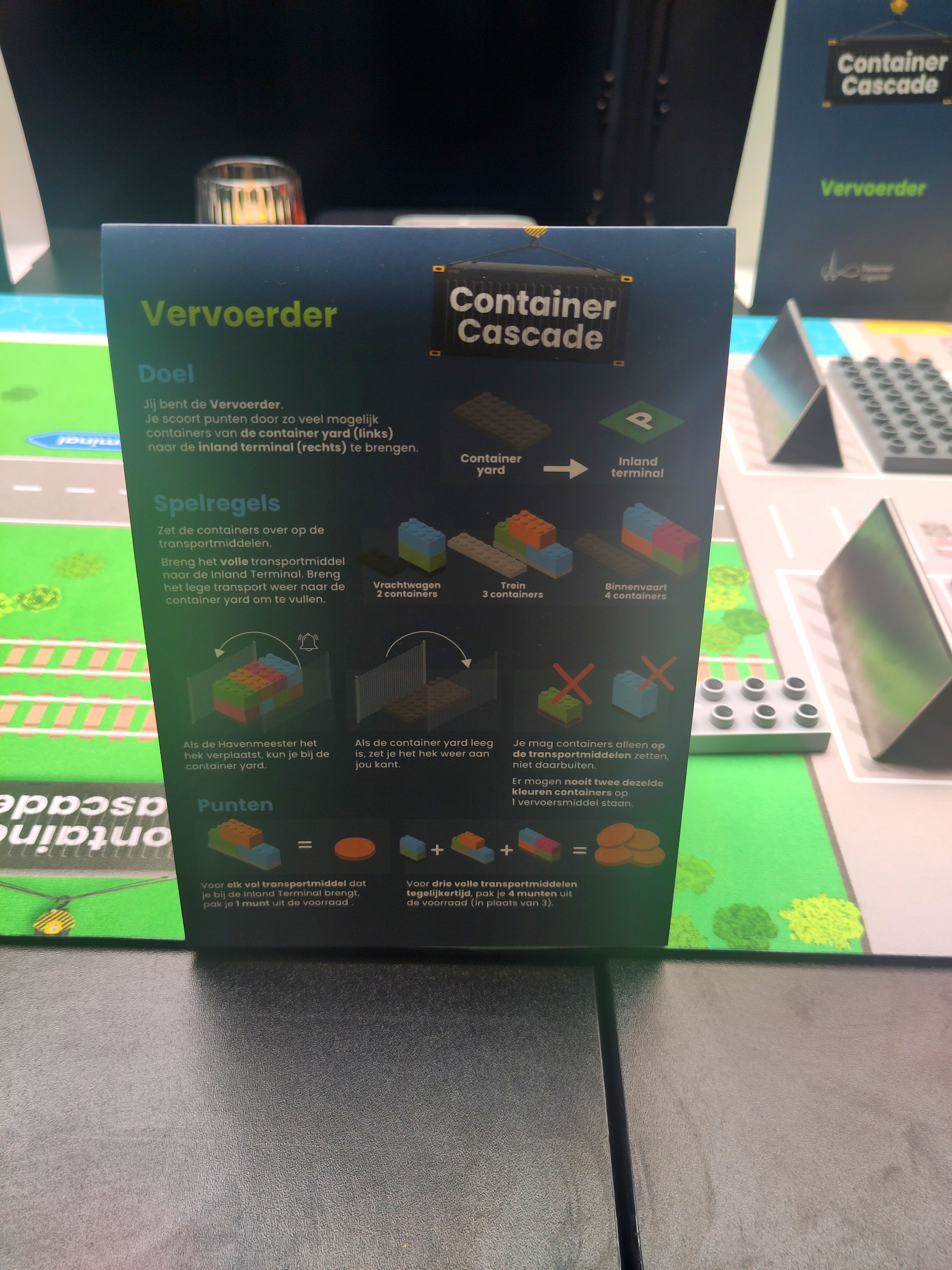
- Pick a role: Havenmeester, Inland Terminal, Barge Operator, Rail Operator, or Vervoerder. Each role has its own card, its own LEGO pieces, and its own KPI.
- Rounds 1 and 2: local optimisation. The Havenmeester takes containers from supply and fills the yard. When the yard is full (8 containers), they signal the Vervoerder. The Vervoerder chooses: truck (2 containers), train (3), or barge (4). Everyone pushes their own score. Nobody watches the chain.
- Somewhere in round 1 or 2, the chain grinds to a halt while your own score looks fine. That moment is the core of the game.
- Rounds 3 and 4: bilateral negotiation. Adjacent links can share limited information. Things start to work, but you also see immediately where the next bottleneck sits.
- Rounds 5 and 6: chain coordination. A shared planning tool is introduced. You can renegotiate KPI agreements. The chain score and your own score start converging.
- After six rounds: debrief. What did you cause? What did you need? Governance, data, bundling: you now have a name for what you felt.
Not invented, researched
The game is built directly on Productiviteit van de achterlandcontainerketen (Topsector Logistiek / SmartPort / Rebel, 2026). The problems you play are the problems from the report. Session data feeds back anonymously into the knowledge base.
Want to play?
Book a session for your team, class or organisation. Or grab the brochure first.